
The Expat Experience
Giovanni's Room and living abroad

Giovanni’s Room by James Baldwin is palpably a great book from very early on. It is easy and pleasurable to read, and at the same time, insanely well-written. It’s set against the background of 1950s Bohemian Paris, it features pretty Parisian boys and American expats, it’s filled with sexuality uncertainty, booze, and late nights that spill into mornings.
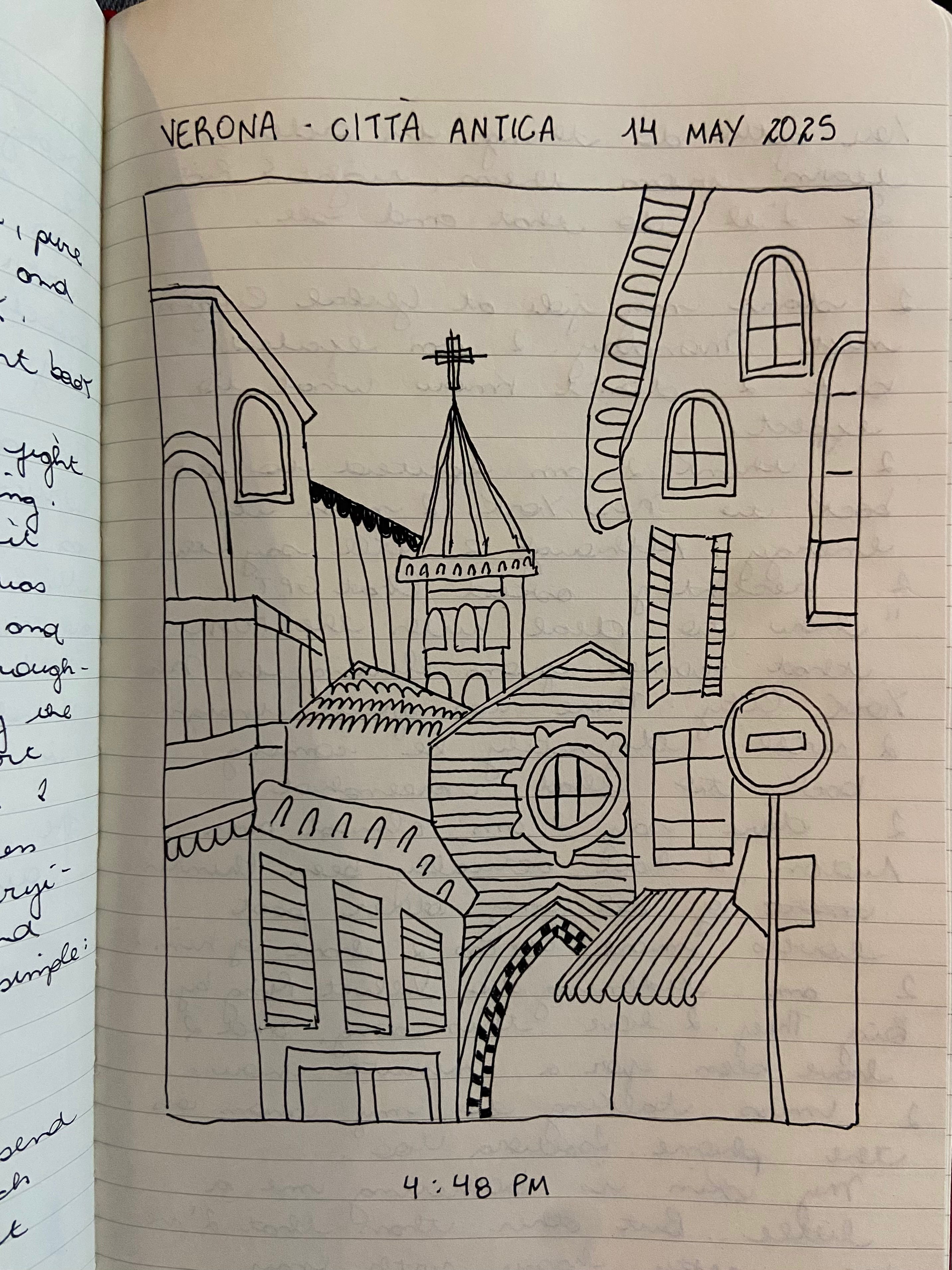
Hi! I am writing again after months and months of running away from my pen. (I write these in my journal before they make it here, if they ever make it here). I am in Italy, and more specifically, on a train to Lake Garda. I have become so aware of the fact that I find it so much easier to write when I am travelling, or more generally, removed from my everyday context. It makes me feel less accountable for the things I write, and it brings a certain level of detachment that I enjoy and very much need. It makes me feel less observed.
When I first made my Substack I vaguely thought that I would be writing into the void, and now the thought that people who I know, and who know me, read my words is equal parts exciting and paralyzing.
I started reading Giovanni’s Room on the plane here. The book had been on my list for a while, and last week I randomly woke up one day and decided that I had to read it right away. So I was so delighted to find a very cheap copy at the used bookstore close to me.
I really liked the way Baldwin writes. He was born in New York and spent a few years in Paris, which automatically makes G.R. (Giovanni’s Rom) feel very autobiographical, as the story follows a character in the same situation.
David is an American living a very free-spirited life in Paris, while grappling with his conflicting sexuality and his notions of what a fulfilling life should look like. In the book, geographical expatriation, or “racial expatriation”, combines to provide a space for the articulation of the homosexual dilemma within the context of postwar American culture (Mae G. Henderson). For context, all the main characters in Giovanni’s Room are white, while the author, James Baldwin, was black.
The book deals with the homosexual dilemma as one of exile — from nation, from culture, from body.
“Why, you will go home and then you will find that home is not home anymore. Then you will really be in trouble. As long as you stay here, you can always think: One day I will go home” (16)
The theme of exile, or expatriation, is one that naturally interests me a lot. Having moved away from Brasil at a fairly young age, I feel like I’ve had quite some time to consider how big the world really is. And, although it irks me to group the North and South America experience into the same category, the book made me reflect on how we (North and South Americans) look at the so-called “old world”. In one essay on the archetype of the American student in Paris, Baldwin wrote: “From the vantage point of Europe, he discovers his own country”.
Now, to quote Saramago, “É preciso sair da ilha para poder ver a ilha” (Loosely, “You have to leave the island in order to see the island”). Baldwin, just as David in the book, perceived America (or the home country) with a mix of attraction and repulsion. Paris/France played the role of an alternative that was, inevitably, both wondrous and disappointing (Citation).

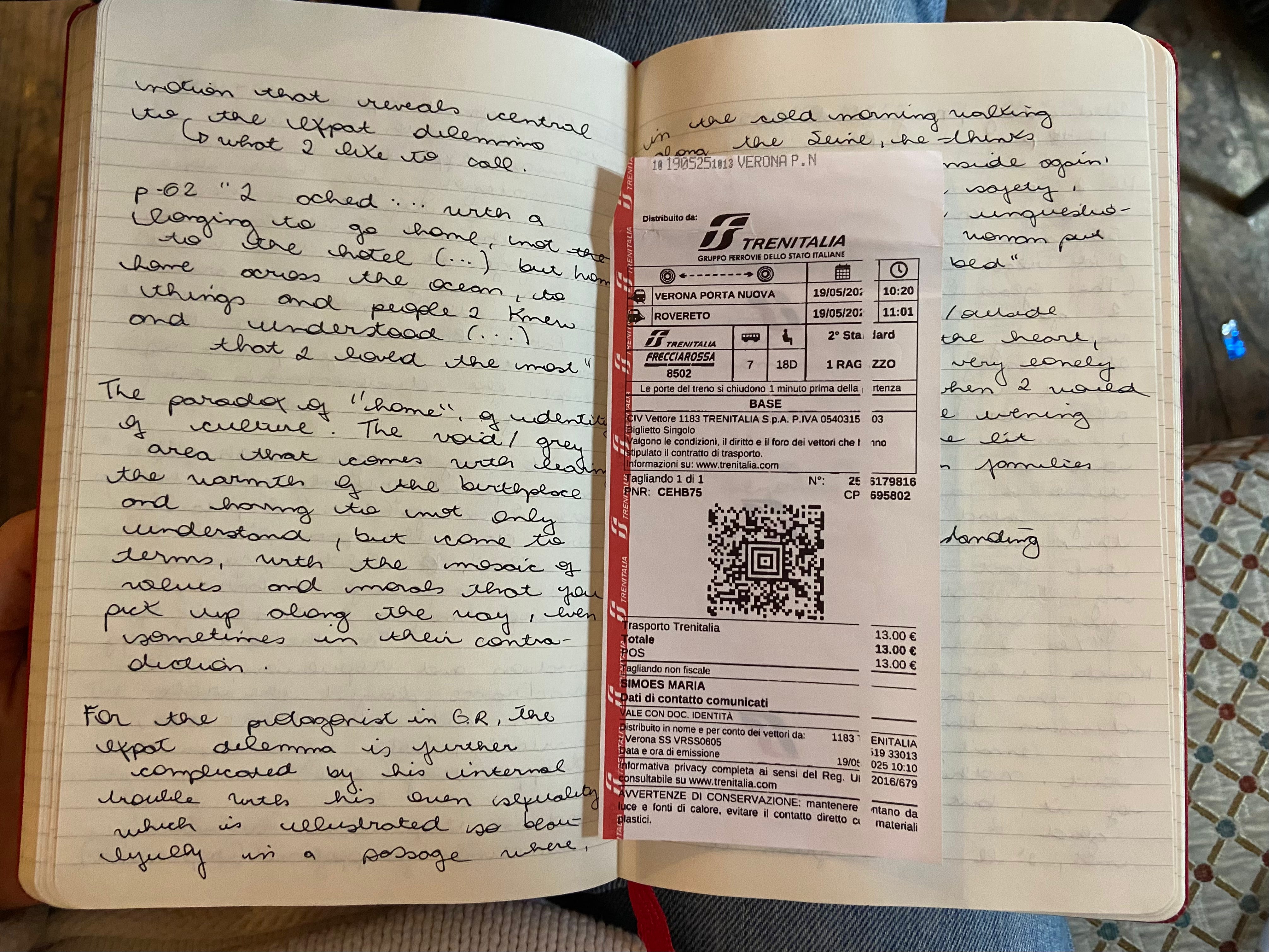
Baldwin taps into a hidden, often suppressed, notion that reveals central to the expat dilemma.
“ I ached abruptly, intolerably, with a longing to go home ; not to that hotel (…) but home, home across the ocean, to things and people I knew and understood, to those things, those places, those people which I would always, helplessly, and in whatever bitterness of spirit, love above all else” (62).
The paradox of “home”, of identity, and of culture. The gray area that comes with leaving the warmth of the native country and having to come to terms with the inevitable mosaic of notions and principles that you pick up along the way, even in their contradiction.
In the book, the character’s struggle is further complicated by his conflicting views on his own sexuality, which appears so beautifully explained in a passage when, while walking along the Seine on a cold mournful morning, while looking into the inside of other people’s homes, he admits: “I wanted to be inside again, with the light and safety, with my manhood unquestioned, watching my woman put my children to bed”.
The expat experience is a constant feeling of standing outside, looking in. And Baldwin captures that so beautifully. The book is charming and melancholic, sad, beautiful, and human, and has become one of my favorites.

Thank you for reading <3 Go add Giovanni’s Room to your reading list! You will not be disappointed!

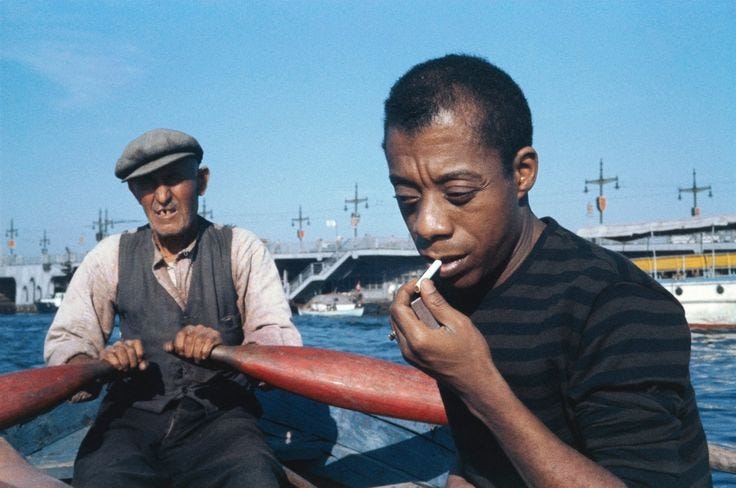
Lovely always. Missed your words!! He does have so many good pictures